
Birthstones
What Is February’s Birthstone and What Makes Amethyst So Special?
Published: Feb 10, 2026
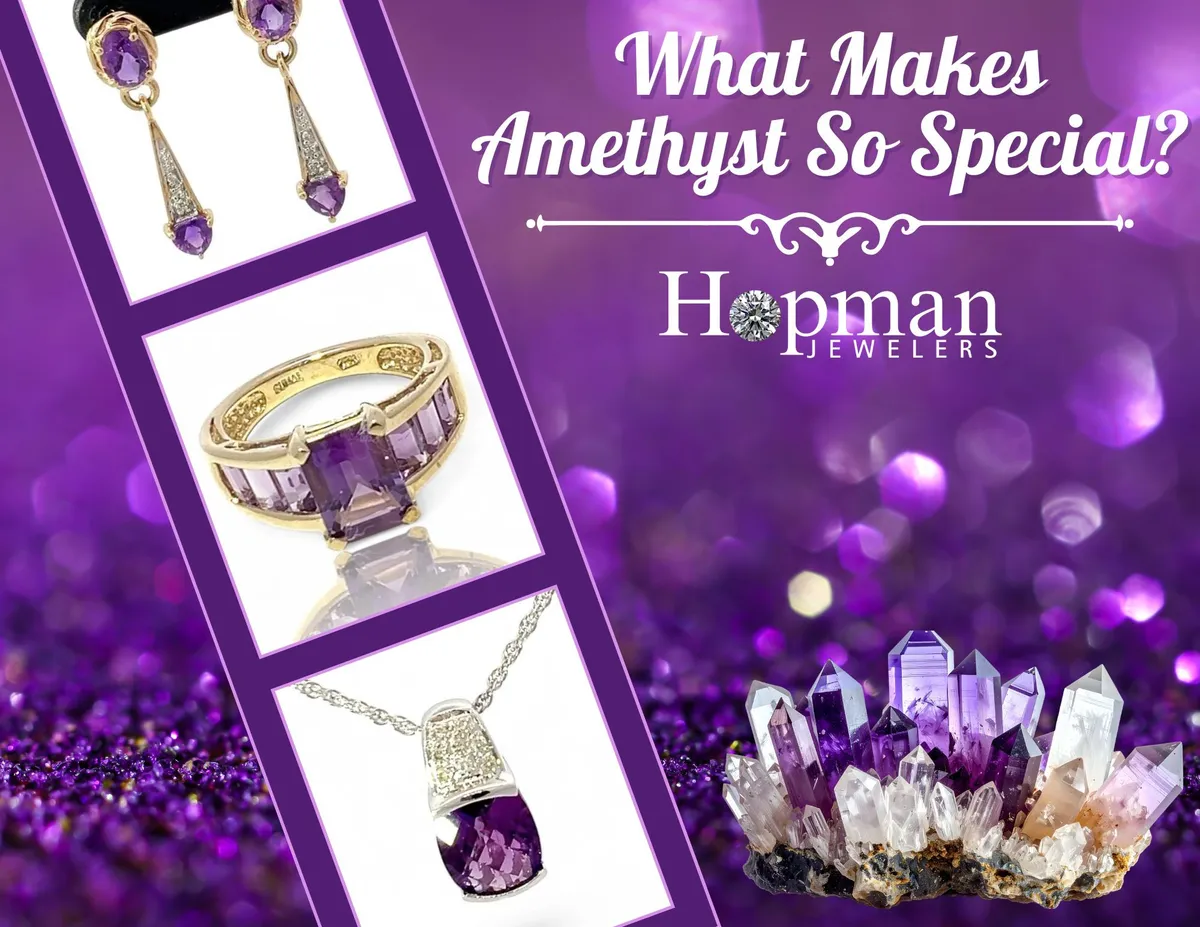
What Is February’s Birthstone and What Makes Amethyst So Special?
Table of Contents
- Quick Overview of Amethyst
- The History of Amethyst
- Meaning and Symbolism of Amethyst
- Amethyst as a Member of the Quartz Family
- Crystal Structure and Physical Properties
- Amethyst on the Mohs Hardness Scale
- Where Amethyst Is Found Around the World
- Natural vs. Treated Amethyst
- Best Jewelry Styles for Amethyst
- How to Care for and Clean Amethyst Jewelry
- Frequently Asked Questions About Amethyst
Summary
Amethyst is the birthstone for February and one of the most recognizable purple gemstones in the world. Known for its rich history, symbolic meaning, and durability, amethyst has been worn by royalty, clergy, and everyday jewelry lovers for centuries. This guide explores the history, geology, symbolism, and care of amethyst, along with tips on choosing the best jewelry styles for this beautiful gemstone.Quick Overview of Amethyst
Amethyst is a purple variety of quartz prized for its color, affordability, and versatility in jewelry. Its hues range from pale lavender to deep royal purple, sometimes with flashes of red or blue. Because quartz is abundant and durable, amethyst is widely used in rings, necklaces, earrings, and bracelets.The History of Amethyst
The name “amethyst” comes from the Greek word amethystos, meaning “not intoxicated.” Ancient Greeks believed the stone could protect its wearer from drunkenness and clouded judgment. Amethyst was often carved into drinking vessels or worn as a talisman.Throughout history, amethyst has been associated with royalty and power. During the Middle Ages, it was considered as valuable as diamonds and was commonly worn by kings, queens, and bishops. Even today, amethyst remains a symbol of prestige and refinement.
Meaning and Symbolism of Amethyst
Amethyst has long been associated with:- Calm and clarity of mind
- Balance and emotional stability
- Protection and spiritual awareness
- Wisdom and inner strength
Amethyst as a Member of the Quartz Family
Amethyst belongs to the quartz family, one of the largest and most diverse gemstone groups. Quartz gemstones all share the same chemical composition: silicon dioxide (SiO₂).Other gemstones in the quartz family include:
- Citrine (yellow to orange)
- Smoky quartz (brown to gray)
- Rose quartz (pink)
- Clear quartz (rock crystal)
- Ametrine (a natural mix of amethyst and citrine)
Crystal Structure and Physical Properties
Amethyst forms in a trigonal crystal system and often grows in six-sided prismatic crystals. It commonly forms inside geodes, where crystals line the interior of hollow rock cavities.Key physical characteristics:
- Crystal system: Trigonal
- Chemical composition: Silicon dioxide (SiO₂)
- Transparency: Transparent to translucent
- Luster: Vitreous (glass-like)
Amethyst on the Mohs Hardness Scale
Amethyst ranks 7 on the Mohs hardness scale, making it durable enough for everyday jewelry with proper care.For reference:
- Talc: 1
- Quartz (amethyst): 7
- Topaz: 8
- Diamond: 10
Where Amethyst Is Found Around the World
Amethyst is mined in several locations worldwide, with quality and color varying by region.Notable sources include:
- Brazil – Produces large quantities, often lighter in color
- Uruguay – Known for deep, rich purple stones
- Zambia – Produces darker amethyst with bluish tones
- Russia – Historically significant, once mined for royal use
- United States – Found in states such as Arizona and North Carolina
Natural vs. Treated Amethyst
Most amethyst on the market are natural, but some stones may be heat-treated to enhance or alter color. When heated, amethyst can turn yellow or orange and is then sold as citrine.Reputable jewelers disclose treatments and ensure stones are properly identified.
Best Jewelry Styles for Amethyst
Amethyst’s color and durability make it suitable for a wide range of jewelry styles:- Rings: Statement rings, cocktail rings, and birthstone rings
- Necklaces: Pendants, solitaire designs, and halo settings
- Earrings: Studs, drops, and vintage-inspired designs
- Bracelets: Tennis-style or gemstone link bracelets
How to Care for and Clean Amethyst Jewelry
To keep amethyst looking its best:- Clean with warm water, mild soap, and a soft brush
- Avoid harsh chemicals and ultrasonic cleaners
- Remove jewelry before heavy physical activity
- Store separately to prevent scratches
Frequently Asked Questions About Amethyst
Is amethyst a good gemstone for everyday wear?Yes. With a Mohs hardness of 7, amethyst is durable enough for regular wear when properly cared for.
Does amethyst fade over time?
Prolonged exposure to strong sunlight or heat may cause fading. Proper storage helps preserve color.
Is amethyst expensive?
Amethyst is considered an affordable gemstone, making it a popular choice for fine jewelry without a high price point.
What does amethyst symbolize as a gift?
Amethyst symbolizes peace, clarity, and emotional balance, making it a thoughtful and meaningful gift.
Is amethyst only for February birthdays?
Not at all. While it is February’s birthstone, amethyst is worn and gifted year-round.